Cà Phê Trứng: Everything About Vietnamese Egg Coffee
Sedalia·June 6, 2026
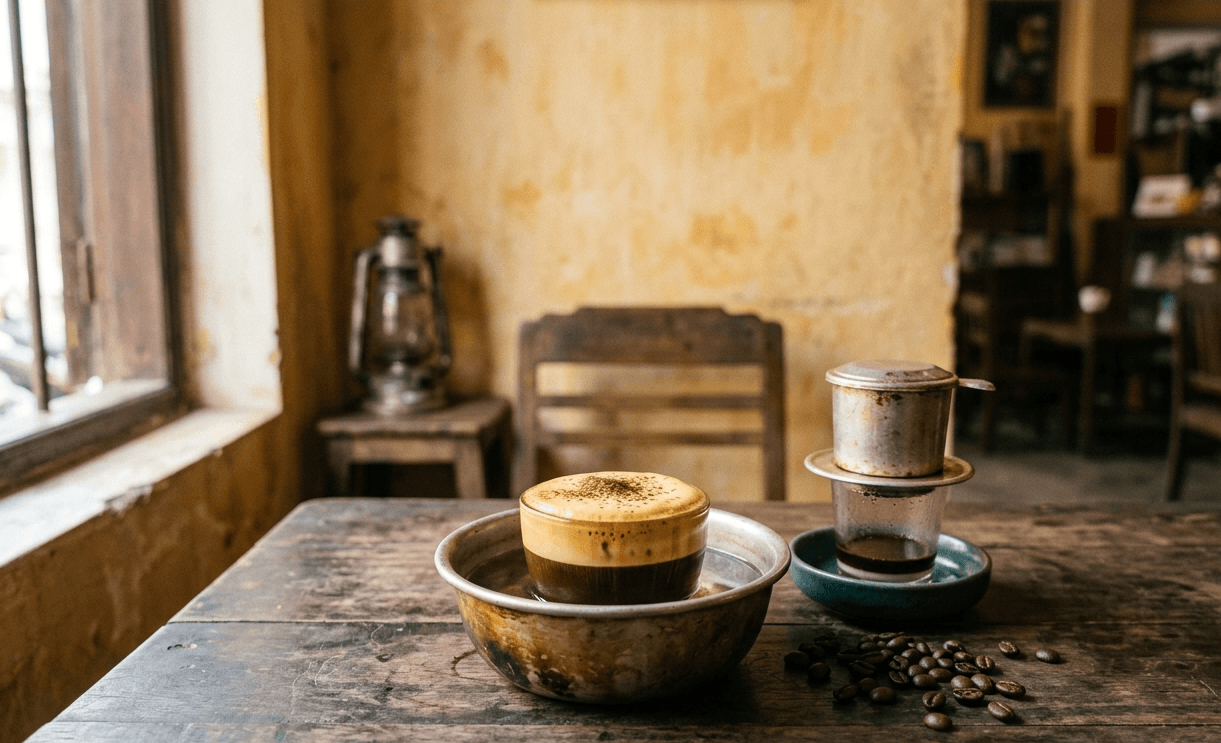
Before you wrinkle your nose at the words "egg" and "coffee" in the same sentence, hear me out: Vietnamese egg coffee is one of the most remarkable drinks on this planet. It tastes nothing like eggs. It tastes like someone melted a tiramisu over a shot of dark, bittersweet coffee.
We lived in Da Nang for a few months, in a condo where one side looked out at the ocean and the other looked over the river and the Dragon Bridge. The freshest Vietnamese food I've ever eaten was right downstairs, and when we wanted to go farther, I had a motorcycle (NOT a scooter, thank you) to get us around the region. Vietnam ruined a lot of other coffee for me, and cà phê trứng is a big reason why. Here's the full story: what it is, where it came from, and how to make it at home.
What Is Egg Coffee?
Cà phê trứng (pronounced roughly "ka fay choong") is strong Vietnamese coffee, usually brewed from robusta beans in a small metal drip filter called a phin, topped with a thick cream made from whipped egg yolks and sweetened condensed milk. The cream sits on the coffee like a golden cloud. It's silky, sweet, and rich, somewhere between custard and meringue. In Hanoi, the cup often arrives sitting in a small bowl of hot water to keep everything warm while you take your time.
It's as much a dessert as it is a coffee. Most cafés that serve it also offer egg cocoa, egg matcha, and other riffs on the same whipped cream base. But the original is the one to start with.
Where It Was Invented
The story starts in Hanoi in 1946. A bartender named Nguyễn Văn Giảng was working at the Sofitel Legend Metropole, the city's grand colonial hotel. Fresh milk was scarce during the war years, so when he wanted to recreate the creamy texture of a cappuccino, he reached for what was available. He whisked egg yolks with sugar and sweetened condensed milk until they turned into a thick, sweet cream, then spooned it over strong coffee.
The drink was a hit with both Vietnamese and foreign guests, so much so that he left the hotel to open his own café. Café Giảng still operates today in Hanoi's Old Quarter, run by his family, serving a recipe that has barely changed in almost eighty years. His son and daughter each run their own cafés in the city, both keeping the family tradition alive. A drink born from scarcity became one of Hanoi's culinary icons.
How to Make Egg Coffee at Home
This is the classic method. It takes about ten minutes and requires nothing fancier than a whisk or a hand mixer.
Ingredients (2 servings)
For the coffee:
4 tablespoons ground coffee (Trung Nguyên if you can find it, Café Du Monde or any dark roast if you can't)
8 to 10 ounces hot water, about 200°F (93°C)
A Vietnamese phin filter or a French press
For the egg cream:
2 fresh egg yolks, at room temperature
4 tablespoons sweetened condensed milk
1/2 teaspoon vanilla extract
Optional: 1 teaspoon sugar if you like it sweeter
Brew the coffee. Add the grounds to your phin, place it over a cup, and pour in the hot water. Let it drip slowly. A proper phin brew takes four to five minutes. If you're using a French press, brew it strong.
Whip the egg cream. While the coffee drips, whisk the egg yolks, condensed milk, and vanilla together until the mixture turns pale, thick, and frothy. This takes real effort by hand, so a small electric whisk helps. You're looking for soft peaks that hold their shape on a spoon.
Assemble. Pour the hot coffee into two small cups, then spoon the egg cream generously on top. If you want the full Hanoi experience, set each cup in a small bowl of hot water to keep it warm.
Tips for a Perfect Cup
Use the freshest eggs you can. The yolk is not cooked, so buy from a source you trust. In Vietnam, the cafés making this drink go through eggs so fast that freshness takes care of itself. I never had an issue in months of enthusiastic consumption.
Strong coffee is not optional. The bold, almost chocolatey edge of Vietnamese robusta is what keeps the sweetness in check. A weak brew turns the whole thing into warm pudding.
Don't substitute the condensed milk. Regular milk and sugar won't give you the same body. Condensed milk is doing structural work here. Whip longer than feels reasonable. The cream should be thick and airy. An underwhipped topping sinks into the coffee and the magic is gone.
One More Thing
Every café in this post earned its mention the same way every shop on Sip Atlas earns its pin: by making something genuinely worth crossing a city for. No paid placements, here or anywhere else on the Atlas. If you make a cup at home using the recipe above, or if you find an egg coffee somewhere in the world that deserves a spot on the map, tell me about it. That's how this guide stays alive.
Now go whip some yolks!
Sedalia